Overview
A Foundational Coenzyme in Cellular Research
Nicotinamide adenine dinucleotide (NAD+) represents the oxidized state of the NAD(H) redox couple and functions as a pivotal electron carrier in cellular metabolism. Its principal role lies in mediating hydride transfer during catabolic and anabolic reactions, thereby coupling redox reactions to ATP generation and other bioenergetic processes. In addition to its canonical role in mitochondrial oxidative phosphorylation and cytosolic glycolysis, NAD+ also participates in extracellular redox signaling under specific physiological and pathological contexts.
Beyond electron transfer, NAD+ serves as a substrate for multiple classes of NAD+-consuming enzymes, including sirtuins, poly(ADP-ribose) polymerases (PARPs), and ADP-ribosyl cyclases (e.g., CD38/CD157). These enzymes regulate a wide range of cellular processes such as post-translational protein modification, chromatin remodeling, DNA repair, calcium signaling, and transcriptional regulation. Furthermore, extracellular NAD+ has been detected as a signaling molecule released from neuronal populations within the vasculature, bladder, gastrointestinal tract, and central nervous system, implicating it in neuromodulation and intercellular communication.
NAD+ : Structure
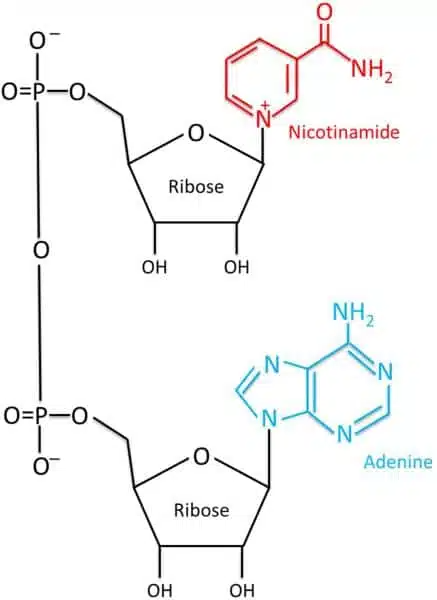
Sequence: N/A
Molecular Formula: C₂₁H₂₇N₇O₁₄P₂
Molecular Weight: 663.43 g/mol
PubChem CID: 925
CAS Number: 53-84-9
IUPAC Name: 1-[(2R,3R,4R,5R)-5-(6-aminopurin-9-yl)-3,4-dihydroxyoxolan-2-yl]-3-carbamoylpyridinium-5-yl dihydrogen phosphate; 5-[(2R,3R,4R,5R)-5-(hydroxymethyl)-3,4-dihydroxyoxolan-2-yl] dihydrogen phosphate
Synonyms: Nicotinamide adenine dinucleotide, β-NAD, NAD, Endopride
Source: PubChem
NAD+ and Cellular Energy Metabolism in Research Models
One of the most extensively studied roles of NAD+ is its involvement in cellular energy production. In laboratory research, NAD+ is required for the proper execution of electron transfer reactions that ultimately support ATP generation. Experimental models with reduced NAD+ availability consistently demonstrate altered mitochondrial performance and reduced metabolic efficiency.
Researchers examining metabolic flux have observed that NAD+ availability directly influences how substrates such as glucose, fatty acids, and amino acids are processed within cells. By acting as a redox mediator, NAD+ enables enzymes to convert these substrates into usable chemical energy while maintaining cellular redox balance.
Because mitochondrial function is highly dependent on NAD+, driven reactions, NAD+ has become a central focus in studies related to mitochondrial biology, bioenergetics, and oxidative stress. Laboratory findings suggest that NAD+ dynamics influence how cells respond to energetic demand, environmental stressors, and metabolic challenges.
NAD+ in DNA Repair and Genomic Stability Research
Beyond energy metabolism, NAD+ is deeply integrated into pathways responsible for maintaining genomic stability. In research environments, NAD+ is required as a substrate for enzymes involved in DNA repair processes, particularly poly (ADP-ribose) polymerases (PARPs). PARPs utilize NAD+ to detect and respond to DNA strand breaks by facilitating repair signaling cascades.
When NAD+ availability is experimentally limited, PARP activity becomes compromised, leading to increased genomic instability in cell culture and preclinical research models. These findings have positioned NAD+ as a critical molecule in studies examining cellular responses to DNA damage, oxidative stress, and replication errors.
NAD+ is also necessary for the activity of sirtuins, a family of NAD+-dependent deacetylases widely investigated for their role in epigenetic regulation, mitochondrial signaling, stress adaptation, and cellular longevity mechanisms. Sirtuin research consistently demonstrates that fluctuating NAD+ levels significantly influence gene expression patterns and chromatin structure.
NAD+ and Cellular Resilience in Experimental Studies
In controlled research settings, NAD+ has been shown to influence how cells maintain balance under various stress conditions. Experimental models indicate that NAD+ availability affects inflammatory signaling pathways, oxidative stress responses, and cellular repair mechanisms.
Laboratory findings suggest that NAD+ supports cellular detoxification processes by enabling redox reactions that neutralize reactive oxygen species (ROS). This has made NAD+ a central molecule in oxidative stress research and studies investigating cellular adaptation to environmental and metabolic stressors.
Importantly, NAD+ is not considered a stimulant or an acute signaling agent in laboratory research. Instead, it is recognized as a foundational coenzyme, meaning its effects are systemic, cumulative, and dependent on long-term cellular dynamics rather than immediate signaling events.
NAD+ Decline and Cellular Aging Research
A consistent observation across multiple research models is that intracellular NAD+ levels decline over time in response to metabolic stress, accumulated DNA damage, inflammatory signaling and environmental exposure. Experimental aging models demonstrate that reduced NAD+ availability correlates with altered mitochondrial efficiency, impaired DNA repair capacity, and disrupted metabolic signaling.
These findings have made NAD+ a primary focus in longevity and aging-related research aimed at understanding cellular decline rather than addressing symptoms. Researchers study NAD+ dynamics to better understand how aging impacts cellular communication networks and metabolic resilience at the molecular level.
Research Integrity and Material Quality
At Focused Peptides, research materials are provided strictly for laboratory and scientific investigation purposes. Products are not intended for human or animal use, clinical administration, or diagnostic application. All materials are supplied with an emphasis on consistency, integrity, and laboratory-grade handling to support controlled experimental environments.
Operations are based within the United States, ensuring reliable fulfillment, professional packaging, and adherence to research material standards throughout the procurement and shipping process.
Frequently Asked Questions (FAQ) (For Research Purposes Only)
What is NAD+ in scientific research?
NAD+ (nicotinamide adenine dinucleotide) is a coenzyme studied extensively in biochemistry and molecular biology. In research models, it serves as a central mediator of redox reactions, energy metabolism, DNA repair, and cellular signaling pathways.
Why NAD+ is considered foundational in cellular studies?
NAD+ is involved in hundreds of enzymatic processes. Because it is required for energy production, genome maintenance, and signaling, its availability impacts nearly every major cellular system under investigation.
What does NAD+ do at the cellular level?
In laboratory settings, NAD+ facilitates electron transfer, supports mitochondrial metabolism, activates NAD+-dependent enzymes (such as sirtuins and PARPs), and contributes to cellular stress adaptation.
How is NAD+ studied in metabolic research?
Researchers analyze NAD+ levels to understand metabolic efficiency, substrate utilization, and mitochondrial function. Fluctuations in NAD+ are often used as biomarkers in metabolic pathway studies.
Why do researchers study NAD+ in aging models?
Experimental aging models show that NAD+ availability decreases over time. Studying this decline helps researchers understand molecular mechanisms underlying cellular aging and functional deterioration.
What role does NAD+ play in DNA repair research?
NAD+ is a required substrate for PARP enzymes, which detect and coordinate DNA repair. Changes in NAD+ availability can significantly influence genomic stability in research models.
How is NAD+ connected to sirtuin research?
Sirtuins are NAD+-dependent enzymes. Their activity directly reflects intracellular NAD+ levels, making NAD+ central to research on gene regulation, epigenetics, and mitochondrial signaling.
Is NAD+ studied for neurological research applications?
Yes. NAD+ is frequently examined in neuronal cell models due to its involvement in mitochondrial energy production, redox balance, and cellular stress resistance.
What factors reduce NAD+ in laboratory models?
Research identifies oxidative stress, inflammation, DNA damage, environmental toxins, and metabolic overload as contributors to NAD+ depletion at the cellular level.
How do researchers attempt to restore NAD+ levels experimentally?
Common approaches include studying metabolic recycling pathways, precursor molecules, enzymatic regulation, and environmental interventions within controlled laboratory settings.
Is NAD+ stable as a research material?
Stability depends on storage, handling, and experimental conditions. Proper laboratory protocols are essential to maintain compound integrity during research use.
Is NAD+ intended for clinical or consumer use?
No. NAD+ provided by Focused Peptides is strictly for research and laboratory use only and is not intended for human or animal consumption, treatment, or diagnosis.
Why is endotoxin testing important for NAD+ research materials?
Endotoxins can significantly interfere with cellular signaling and inflammatory pathways in experimental models. Using research peptides endotoxin tested and endotoxin-free peptide materials helps ensure that observed results are attributable to NAD+ activity rather than contamination artifacts.
What does LPS-free peptide indicate in research applications?
An LPS-free peptide designation indicates the absence of lipopolysaccharide contamination, which is critical for maintaining accuracy in cell-based assays, metabolic studies, and molecular signaling research.
How does high-purity NAD+ benefit experimental reproducibility?
High-purity research materials reduce background noise and variability in biochemical assays, enzymatic studies, and metabolic pathway analysis, supporting consistent and interpretable research outcomes.
Are these quality standards relevant across different research models?
Yes. Endotoxin-free peptide and LPS-free peptide standards are relevant for in vitro systems, biochemical assays, and controlled experimental models where contamination could alter signaling, gene expression, or metabolic readouts.
NAD+ : Research
Aging & Longevity
- NAD⁺ levels decline with age in multiple tissues.
- Supplementation with precursors (e.g., NR, NMN) restores NAD⁺ and has been shown in preclinical models to improve mitochondrial function, enhance DNA repair, and extend lifespan in lower organisms.
Neurodegeneration
- Depletion of NAD⁺ is linked to neurodegenerative diseases (e.g., Alzheimer’s, Parkinson’s).
- NAD⁺ boosting strategies have shown neuroprotective effects in animal models, reducing neuroinflammation and improving cognitive performance.
Metabolic Disorders
- NAD⁺ plays a crucial role in insulin sensitivity, lipid metabolism, and mitochondrial biogenesis.
- Restoring NAD⁺ levels improves metabolic health in models of obesity, diabetes, and fatty liver disease.
DNA Repair & Cancer
- PARP-mediated DNA repair consumes NAD⁺.
- Cancer cells often upregulate NAD⁺ biosynthesis to sustain growth.
- Therapeutic strategies include PARP inhibitors and NAMPT inhibitors for targeting cancer metabolism.
Immune Function & Inflammation
- CD38, an NAD⁺-consuming enzyme, is upregulated in aging and chronic inflammation.
- Modulating NAD⁺ metabolism influences immune cell activation and cytokine production.
NAD+ : Scientific Journal & Authors
Shin-ichiro Imai, MD, PhD, focuses on elucidating the systemic regulation of aging and longevity in mammals, with the goal of translating these insights into effective anti-aging interventions that promote healthier and more productive later stages of life. His research highlights three key tissues as fundamental components in mammalian aging and longevity regulation: the hypothalamus (serving as the central control hub), skeletal muscle (functioning as an effector), and adipose tissue (acting as a modulator). These discoveries have been synthesized into a unifying framework referred to as NAD World 2.0 (Imai, npj Systems Biology and Applications, 2016). Through this work, Dr. Imai and colleagues aim to clarify the critical inter-tissue communications among the hypothalamus, skeletal muscle, and adipose tissue in governing mammalian aging and lifespan. The ultimate objective of these studies is to develop scientifically grounded strategies for effective anti-aging interventions.
Referenced Citations
Lloret A, Beal MF. PGC-1α, Sirtuins and PARPs in Huntington’s Disease and Other Neurodegenerative Conditions: NAD+ to Rule Them All. Neurochem Res. 2019 Oct;44(10):2423-2434. doi: 10.1007/s11064-019-02809-1. Epub 2019 May 7. PMID: 31065944.
Chini CCS, Tarragó MG, Chini EN. NAD and the aging process: Role in life, death and everything in between. Mol Cell Endocrinol. 2017 Nov 5;455:62-74. doi: 10.1016/j.mce.2016.11.003. Epub 2016 Nov 5. PMID: 27825999; PMCID: PMC5419884.
Garten A, Schuster S, Penke M, Gorski T, de Giorgis T, Kiess W. Physiological and pathophysiological roles of NAMPT and NAD metabolism. Nat Rev Endocrinol. 2015 Sep;11(9):535-46. doi: 10.1038/nrendo.2015.117. Epub 2015 Jul 28. PMID: 26215259.
Verdin E. NAD⁺ in aging, metabolism, and neurodegeneration. Science. 2015 Dec 4;350(6265):1208-13. doi: 10.1126/science.aac4854. PMID: 26785480.


