BPC – 157 Overview:
A Research-Focused Examination of the “Body Protection Compound”
BPC-157 stands for Body Protection Compound-157, a synthetic pentadecapeptide—meaning it’s a chain of 15 amino acids. Discovered in the early 1990s, it was isolated from human gastric (stomach) juice and shows remarkable stability even in the harsh gastric environment
Preclinical Findings (Animal and Lab Studies)
Tissue Healing & Regeneration
BPC-157 has shown promising effects in animal models, accelerating healing in tissues such as skin, mucosa, muscle, tendon, ligament, bone, and even the cornea.
Mechanisms of Action
Though not fully elucidated, evidence suggests:
- Upregulation of growth factors (e.g., growth hormone receptor expression in tendon fibroblasts).
- Promotion of blood vessel formation (angiogenesis) and modulation of nitric oxide (NO) pathways
Safety in Animals
Preclinical studies across mice, rats, rabbits, and dogs consistently report no significant toxicity, suggesting a favorable safety profile in these models
BPC – 157: Structure
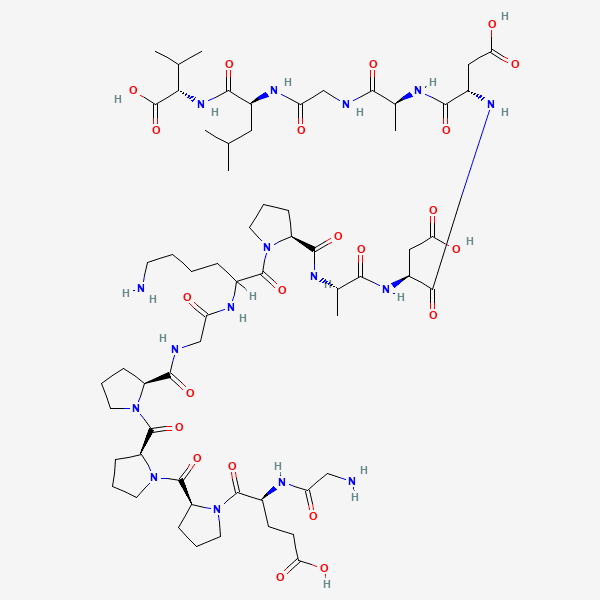
Source: pubchem
Sequence: GEPPPGKPADDAGLV
Molecular Formula: C₆₂H₉₈N₁₆O₂₂
Molecular Weight: ~1419.54 Da
PubChem CID: 9941957
Background and Scientific Interest
The earliest published investigations into BPC-157 centered around its apparent resistance to enzymatic degradation in gastric environments. Many peptides degrade rapidly in acidic or enzyme-rich conditions, but BPC-157 demonstrated unusual persistence. This characteristic made it a compelling compound for researchers studying gastrointestinal systems and tissue exposure models.
As investigation expanded, scientists began examining BPC-157 across a variety of experimental injury and disruption models. These included mechanical tissue damage simulations, chemically induced gastric lesions, vascular interruption models, and inflammation-driven structural breakdown in animal subjects. Its consistent appearance across multiple research domains contributed to its reputation as a peptide with broad biological engagement, though always within preclinical boundaries.
Structural and Biochemical Characteristics
BPC-157’s small size-15 amino acids, may play a role in its experimental versatility. Short-chain peptides are often easier to work with in controlled research settings due to predictable binding behavior and reduced structural complexity.
In laboratory studies, BPC-157 has been investigated for its potential interaction with:
- Cell signaling molecules involved in tissue maintenance
- Structural proteins such as collagen-related components
- Vascular signaling pathways
- Inflammatory mediator systems
These interactions are studied for mechanistic understanding only, not for functional outcomes in living organisms beyond research observations.
Areas of Active Research Focus
1. Tissue and Structural Integrity Models
One of the most studied applications of BPC-157 is within experimental tissue-disruption frameworks, particularly involving connective tissue. Researchers have applied the peptide in models that simulate disruption to tendons, ligaments, muscle fibers, and bone-adjacent structures.
Within these studies, investigators observe markers such as:
- Cellular organization changes
- Collagen fiber alignment
- Structural resilience during recovery phases
- Restoration timelines in controlled injury environments
These findings are valuable for understanding how certain peptides may influence biological signaling pathways related to tissue organization, not for drawing conclusions about real-world repair outcomes.
2. Gastrointestinal and Mucosal Stability Research
Given its origin from gastric proteins, BPC-157 is frequently examined in gastrointestinal research models. Experimental studies explore how the compound behaves in environments replicating gastric acidity, mucosal damage, and chemically induced erosion.
Key research observations include:
- Interactions with gastric lining structures
- Effects on experimentally induced lesion models
- Stability in digestive-like conditions
- Influence on markers associated with mucosal defense mechanisms
These investigations remain strictly non-clinical and are designed to improve understanding of peptide behavior within digestive-system simulations.
3. Vascular and Angiogenesis-Related Investigations
Another prominent area of interest involves how BPC-157 interacts with vascular signaling in test models. Angiogenesis—the formation of new blood vessels—is a critical biological process, and researchers study it to better understand wound response, oxygen distribution, and nutrient flow in tissue models.
Laboratory studies examine whether BPC-157 may influence:
- Endothelial cell activity
- Vascular signaling pathways
- Microcirculatory patterns following experimental disruption
These models help scientists map peptide-pathway relationships without drawing conclusions about functional enhancement.
4. Inflammatory Marker Modulation Studies
Inflammation is a complex, multi-pathway biological response, and many peptides are studied for how they interact with inflammatory signaling networks. BPC-157 has been included in studies measuring inflammatory markers following deliberate tissue stress or chemical exposure.
Within these experiments, researchers monitor:
- Cytokine activity shifts
- Enzymatic response changes
- Temporal patterns in inflammatory signaling
Again, these observations remain descriptive and exploratory rather than outcome-driven.
5. Neurological and Brain–Gut Axis Exploration
A smaller but growing body of preclinical literature investigates BPC-157 within neurological and brain–gut communication models. These studies focus on signaling interactions rather than neurological outcomes.
Areas of investigation include:
- Neuron-associated signaling behavior
- Interaction between gut-derived signals and nervous system markers
- Oxidative stress indicators in experimental nerve disruption models
These early-phase studies are exploratory in nature and not predictive of applied neurological effects.
Research Formulations Studied
Different laboratory environments require different preparations of BPC-157, depending on the experiment type:
- Lyophilized BPC-157 powder for controlled reconstitution
- Solution-based preparations for stability and solubility testing
- Encapsulation models analyzed solely for degradation and stability benchmarking
Selection of formulation is determined by the experimental design rather than any intended administration.
Why BPC-157 Is Widely Studied in Research Settings
Researchers continue to examine BPC-157 due to several notable attributes:
- Demonstrated stability in challenging chemical environments
- Broad engagement with multiple biological signaling pathways
- Applicability across diverse experimental models
- Reproducibility in laboratory conditions
These qualities make it a useful reference peptide in mechanistic studies involving tissue signaling and structural response.
About Focused Peptides
At Focused Peptides, we supply BPC-157 exclusively for laboratory and research purposes. Our operations are structured to support professional research environments, providing materials that meet strict quality and handling standards.
As a U.S.-based supplier, we focus on:
- Verified sourcing and purity benchmarks
- Secure, discreet packaging optimized for research shipment
- Fast, reliable order processing
- Encrypted checkout and professional customer support
All materials are clearly labeled NOT FOR HUMAN OR ANIMAL USE and are intended solely for scientific investigation.
Frequently Asked Questions (FAQ)
What is BPC-157?
BPC-157 is a synthetic 15–amino acid peptide based on a fragment identified in gastric proteins. It is studied exclusively in laboratory and animal-based research models.
What types of research include BPC-157?
It is commonly examined in tissue integrity studies, gastrointestinal simulations, vascular signaling experiments, inflammatory pathway research, and exploratory neurological models.
Is BPC-157 approved for medical use?
No. BPC-157 is not approved for human or veterinary medical use and is intended strictly for research and educational applications.
Why BPC-157 is considered stable?
Preclinical research indicates it remains structurally intact in acidic and enzymatic environments, making it a reliable subject for degradation and interaction studies.
What makes BPC-157 different from other peptides?
Its broad engagement with multiple biological pathways and reproducible behavior across experimental models distinguishes it from many short-chain peptides.
Is there human clinical data on BPC-157?
Human data is extremely limited. The vast majority of information comes from in-vitro and animal studies.
How is BPC-157 stored in research settings?
It is typically stored as a lyophilized powder in cool, dry conditions. Once reconstituted for experiments, storage follows standard laboratory peptide protocols.
Can BPC-157 be studied alongside other compounds?
Yes. Researchers frequently include it in combination studies to observe signaling interactions or comparative pathway behavior.
Are side effects documented in research models?
Animal studies report minimal adverse reactions, but these findings cannot be extrapolated beyond controlled research environments.
Is BPC-157 legal to purchase?
In many jurisdictions, BPC-157 can be purchased for laboratory research purposes. Regulatory requirements vary by location and should always be verified.
Does BPC-157 affect inflammatory pathways?
Some studies suggest interaction with inflammatory signaling markers in experimental models, though conclusions remain preliminary.
Why does research on BPC-157 continue?
Its stability, versatility, and broad pathway engagement make it valuable for ongoing mechanistic research across multiple biological systems.
What does “LPS-free peptide” mean in the context of BPC-157 research?
An LPS-free peptide indicates that the research material has been tested to ensure minimal lipopolysaccharide contamination. This is important in laboratory studies, as LPS can interfere with experimental outcomes and immune-response measurements in research models.
Why is endotoxin-free status important for research peptides like BPC-157?
Endotoxins can introduce variability and confounding effects in in-vitro and laboratory experiments. An endotoxin-free peptide supports cleaner data collection and improves reproducibility in controlled research environments.
BPC – 157: Research
Wound Healing & Tissue Regeneration
BPC-157 consistently accelerates repair across numerous injury models—skin ulcers, burns, muscle crushes, tendon and ligament tears, and even bone defects. These studies span rodents and rabbits.
Much work has been expended to demonstrate the potent effect of BPC 157 on the healing process in various experimental models in vivo (i.e., alkali-burn wounds, alloxan-induced gastric lesions) [78,79]. Indeed, this activity of the peptide was the first to be demonstrated, and it remained one of the most adequately described. Therefore, in order not to repeat the information given in several review papers, we refer the reader to some of those papers [80,81]. Nevertheless, a brief summary of healing properties induced by the compound is presented in Table 1.
Neuropsychiatric Disorders
Among mental disorders, depression, anxiety, and schizophrenia are the best known and most frequent. All those pathological conditions result from disturbances in the levels of various brain neurotransmitters such as serotonin (5-hydroxytryptamine (5-HT)) and dopamine. In major depressive disorder (MDD) and other depression-like conditions, it is still hypothesized that serotonin concentration, which is abnormally reduced, is the main factor [93]. However, as Moncrieff and colleagues point out in an attractive systemic review, there is no convincing evidence that depression could be associated with or caused by lower serotonin concentrations or activity [94]. With anxiety or schizophrenia, dopamine levels are elevated [95,96]. However, other neurotransmitters and receptor systems are also involved (e.g., γ-aminobutyric acid (GABA) and serotonin) [97,98]. Nevertheless, most first-line drugs for the treatment of those disorders target the serotonin and/or dopamine systems either directly (e.g., in depression) or indirectly via modulation of GABA-A receptors.
In 2004, it was reported that subcutaneous (s.c.) administration of the BPC 157 peptide to rats (10 μg/kg/day for 7 days) resulted in brain region-specific increases in serotonin synthesis [99], as determined by the precise alpha-[14C]methyl-L-tryptophan (alpha-MTrp) autoradiographic method. At the same time, the study was preceded by another one conducted by Sikiric et al. [100], who in 2000 showed that BPC 157 can serve as a potent antidepressant as measured by the Porsolt test (where peptide counteracts freezing). In addition, it was found that BPC 157 effectively reduced some of the symptoms occurring in the serotonin syndrome [26], thus exhibiting a rather specific counteraction of an excessive stimulation of 5-HT receptor subtypes (5-HT2A rather than 5-HT1A). This was demonstrated by the fact that administration of the peptide counteracted 5-HT receptor-dependent symptoms induced by pargyline + L-tryptophan, i.e., hyperthermia and wet dog shake related to 5-HT2A agonism, but not 5-HT1A-related forepaw treading, hind limb abduction, or hypothermia.
Other studies also clearly confirm its interactions with the dopaminergic system. In this context, BPC 157 was found to antagonize the anxiety behavior triggered by amphetamine, whose activity and effects were due to elevated extracellular dopamine levels [55,101]. Similarly, it alleviates withdrawal symptoms in animals chronically fed with diazepam [102], as upon withdrawal, the inhibitory influence of neurons was thought to be suppressed. This, in an effort to “compensate” for previous suppression of the release of DA, taking place during benzodiazepine administration, resulted in a sudden increase in DA concentrations [103].
BPC – 157 : Scientific Journal & Authors
Predrag Sikirić, Professor at the University of Zagreb, has been a leading contributor to research on the stable gastric pentadecapeptide BPC-157. He is the primary author of “Novel Cytoprotective Mediator, Stable Gastric Pentadecapeptide BPC-157: Vascular Recruitment and Gastrointestinal Tract Healing” and a co-author of “Stable Gastric Pentadecapeptide BPC-157 in Honeybee (Apis mellifera) Therapy to Control Nosema ceranae Invasions in Apiary Conditions.”
Referenced Citations
Stable Gastric Pentadecapeptide BPC 157 as a Therapy and Safety Key: A Special Beneficial Pleiotropic Effect Controlling and Modulating Angiogenesis and the NO-System
Predrag Sikiric 1, Sven Seiwerth 2, Anita Skrtic 2, Mario Staresinic 3, Sanja Strbe 1, Antonia Vuksic 1, Suncana Sikiric 2, Dinko Bekic 1, Dragan Soldo 1, Boris Grizelj 1, Luka Novosel 1 4, Lidija Beketic Oreskovic 1, Ivana Oreskovic 1, Mirjana Stupnisek 1, Alenka Boban Blagaic 1, Ivan Dobric 1 3
Józwiak M, Bauer M, Kamysz W, Kleczkowska P. Multifunctionality and Possible Medical Application of the BPC 157 Peptide-Literature and Patent Review. Pharmaceuticals (Basel). 2025 Jan 30;18(2):185. doi: 10.3390/ph18020185. PMID: 40005999; PMCID: PMC11859134.


