Overview
A Dual-Incretin Peptide in Advanced Gastrointestinal and Metabolic Research
GLP2 is a synthetically engineered dual-acting peptide that functions as an agonist at both the glucose-dependent insulinotropic polypeptide (GIP) receptor and the glucagon-like peptide-1 (GLP-1) receptor. This dual-incretin mechanism distinguishes GLP2 from traditional mono-agonist incretin analogs and has made it a subject of extensive investigation in metabolic and gastrointestinal research models.
By integrating GIP and GLP-1 receptor activity within a single molecular framework, GLP2 is utilized in experimental settings to examine coordinated endocrine signaling, intestinal physiology, energy balance regulation, and gut-associated structural adaptation. All findings related to GLP2 remain limited to controlled laboratory, in vitro and preclinical research contexts. GLP2 is not approved for human or veterinary use and is strictly intended for scientific investigation.
Regulatory History & Indications
May 13, 2022: FDA approval of GLP2 for adults with type 2 diabetes, to complement diet and exercise.
November 2023: Expanded approval under the brand Zepbound for chronic weight management—including for obesity or overweight adults with at least one weight-related comorbidity.
Additionally, the UK regulator authorized GLP2 for weight management in November 2023, and later, Zepbound for obstructive sleep apnea in 2024
Efficacy in Type 2 Diabetes (SURPASS Program)
SURPASS-1 (Placebo-controlled)
Over 40 weeks, GLP2 (5–15 mg weekly) significantly reduced HbA₁c (by ~1.9–2.1%) versus placebo, and induced 7–9.5 kg weight loss. A striking percentage of participants reached HbA₁c targets of <7%, <6.5%, and even <5.7%, with minimal hypoglycemia and mostly mild GI side effects. The LancetScienceDirect
SURPASS-2 (vs. GLP1-S 1 mg)
In this 40-week open-label comparator, GLP2 demonstrated superior glycemic control and weight loss:
HbA₁c reductions: up to –2.46% (15 mg) vs. –1.86% (GLP1-S)
Mean weight loss: up to –12.4 kg vs. –6.2 kg
Higher proportions achieved HbA₁c <7% and <5.7%
Side effects again primarily mild-to-moderate GI symptoms. New England Journal of MedicineLilly
Overall SURPASS Findings
GLP2 provided greater HbA₁c reductions (1.87–3.02%) and weight reductions (5.4–12.9 kg), outperforming placebo, GLP1-S and basal insulins across global cohorts and durations up to 104 weeks. Benefits extended to cardiometabolic parameters: blood pressure, lipids, liver fat, and albuminuria. PubMed
GLP2 : Structure
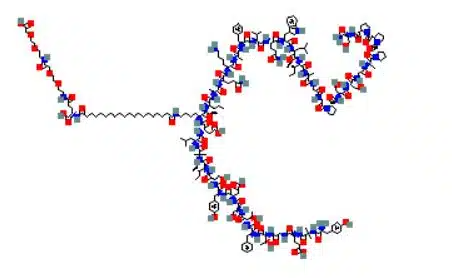
Amino Acid Sequence: YE-Aib-GTFTSDYSI-Aib-LDKIAQ (C20 fatty acid) AFVQWLIAGGPSSGAPPPS
Note: Aib is a non-coded (non-proteinogenic) amino acid – H₂H-C(CH₃)₂-COOH
Molecular Formula: C₂₂₅H₃₄₈N₄₈O₆₈
Molecular Weight: 4813.527 g/mol
PubChem CID: 156588324
CAS Number: 2023788-19-2
Synonyms: GLP2, P1206, LY3298176, Dual GIP and GLP-1 receptor agonist (GIP/GLP-1RA)
Source: PubChem
Mechanistic Background
Dual Receptor Engagement
GLP2 is designed to activate both GIP and GLP-1 receptors, which naturally function as incretin hormones involved in postprandial metabolic signaling. In experimental systems, the simultaneous activation of these receptors allows researchers to evaluate synergistic endocrine effects that differ from those produced by selective receptor agonists.
In glucose-dependent models, GLP2 has been shown to:
- Enhance insulin secretion pathways in response to elevated glucose concentrations
- Suppress excessive glucagon signaling, limiting endogenous glucose production
- Improve coordination between nutrient sensing and hormonal response
These effects are investigated primarily in isolated pancreatic tissue models, metabolic cell lines, and animal research protocols designed to explore systemic glucose handling.
Gastrointestinal and Enteric Physiology Effects
Modulation of Gastric and Intestinal Transit
In gastrointestinal research models, GLP2 demonstrates a capacity to influence gastric emptying rates and intestinal transit dynamics. By slowing gastric motility, the compound allows for prolonged nutrient exposure within the upper gastrointestinal tract, which is associated with altered post-ingestive glucose excursions in experimental settings.
These properties make GLP2 useful in the study of:
- Nutrient-hormone signaling coordination
- Post-meal glucose regulation mechanisms
- Enteric nervous system modulation
Intestinal Structural and Barrier Research Applications
One of the most notable areas of investigation involving GLP2 centers on intestinal morphology and barrier integrity.
1. Enhanced Intestinal Barrier Integrity Models
GLP2 is frequently examined for its role in maintaining epithelial tight junction integrity. In laboratory models simulating increased intestinal permeability, researchers observe changes in epithelial cohesion, junction protein expression, and transepithelial resistance markers following GLP2 exposure.
These studies aim to clarify mechanisms related to:
- Barrier maintenance under inflammatory stress
- Structural resilience of the mucosal lining
- Prevention of excessive luminal permeability
2. Villus Architecture and Absorptive Surface Area
Preclinical investigations often assess GLP2 for its effects on intestinal villus height, crypt depth, and overall mucosal surface expansion. These structural parameters are critical for understanding nutrient absorption efficiency in both normal and compromised gastrointestinal environments.
In controlled models, GLP2 is associated with:
- Increased villus length
- Enhanced mucosal surface continuity
- Improved structural organization of intestinal lining cells
3. Enterocyte Turnover and Mucosal Regeneration
GLP2 is utilized in studies examining intestinal epithelial renewal. Enterocytes undergo continuous turnover, and GLP2-mediated signaling provides insight into how incretin pathways may support balanced regeneration following injury, inflammation, or exposure to experimental stressors.
Applications include research on:
- Post-inflammatory intestinal remodeling
- Recovery following chemically-induced mucosal damage
- Adaptive responses following nutrient deprivation or refeeding
4. Modulation of Gastrointestinal Inflammatory Pathways
Certain research protocols evaluate GLP2’s influence on inflammatory signaling pathways within gut-associated tissues. These studies focus on cytokine expression, immune-cell interaction within the mucosa, and inflammatory mediator activity.
While not considered an anti-inflammatory agent, GLP2-associated epithelial stabilization is investigated for its indirect role in reducing inflammatory cascade activation caused by compromised barrier function.
Peptide Stability and Experimental Reliability
GLP2 is engineered for improved structural stability compared to native GLP-2 peptides. This enhanced stability allows for extended experimental windows and more predictable pharmacodynamic behavior in laboratory studies.
Key stability-related features include:
- Increased resistance to enzymatic degradation
- Consistent receptor engagement over extended observation periods
- Improved reproducibility across experimental batches
These characteristics make GLP2 suitable for long-term gastrointestinal and metabolic research protocols.
Defining Features of GLP2 in Research Settings
- High selectivity for GIP and GLP-1 receptors
- Engineered peptide backbone for enhanced durability
- Consistent gastrointestinal-targeted activity in controlled models
- Suitable for chronic and longitudinal study designs
- Verified purity when sourced from licensed peptide suppliers
Importance of Using Focused Research-Grade Peptides
Focused Peptides provides high-purity research compounds intended solely for scientific and laboratory use. All GLP2 supplied is produced under controlled conditions to ensure consistency, accuracy, and reliability in experimental environments.
Key supplier considerations include:
- Confirmed peptide purity and molecular identity
- Secure and professional packaging protocols
- Fast and reliable fulfillment within the United States
- Compatibility with standardized laboratory storage requirements
All products are provided strictly for non-clinical, non-diagnostic research purposes.
Frequently Asked Questions (FAQ)
1. What is GLP2 used for in research?
GLP2 is used to study intestinal barrier integrity, epithelial regeneration, nutrient absorption models, and dual-incretin endocrine signaling in controlled laboratory and preclinical environments.
2. Is GLP2 approved for human or veterinary use?
No. GLP2 is not approved for human consumption, medical treatment, animal use, or supplementation. It is strictly a research compound.
3. How does GLP2 compare to native GLP-2 peptides?
GLP2 is structurally modified for enhanced stability, prolonged receptor activity, and improved resistance to enzymatic degradation, making it more suitable for extended research protocols.
4. Are side effects known?
Any observed effects have only been documented in laboratory or preclinical research contexts. No human safety data exist.
5. How GLP2 is typically stored?
Research protocols generally recommend storage at −20°C in a dry, light-controlled environment. Specific handling guidelines should always follow the supplier’s technical documentation.
6. Can GLP2 be combined with other research peptides?
Combination studies are possible in controlled research settings, provided experimental variables are clearly documented and ethically approved. Common models examine interactions with incretin analogs or gastrointestinal modulators.
7. Does GLP2 directly treat gastrointestinal conditions?
No. GLP2 is not a treatment. It is a research tool used to study physiological mechanisms related to intestinal structure and function.
8. What types of studies benefit most from GLP2?
Long-term gut physiology studies, epithelial repair models, permeability research, and metabolic signaling investigations commonly utilize GLP2.
9. Is GLP2 suitable for acute experiments?
While it can be used acutely, its stability and design make it particularly useful in chronic or longitudinal research protocols.
10. What makes GLP2 distinct among incretin-related peptides?
Its ability to engage both GIP and GLP-1 receptors while also supporting intestinal structural research uniquely positions GLP2 for multifaceted experimental applications.
11. Are there regulatory restrictions on GLP2?
GLP2 must be handled in compliance with local and federal research regulations. It is intended only for qualified research institutions and professionals.
12. What does LPS-free mean in the context of GLP2?
An LPS-free peptide indicates that GLP2 has been tested to confirm the absence of lipopolysaccharides (LPS), which are bacterial endotoxins that can interfere with cellular and biochemical research outcomes.
13. Why is endotoxin-free status important for research peptides?
Using an endotoxin-free peptide helps reduce confounding inflammatory or signaling artifacts in experimental systems, supporting more accurate interpretation of receptor activity and metabolic signaling pathways.
14. How are research peptides endotoxin tested?
Research peptides endotoxin tested undergo validated analytical methods, such as LAL-based assays, to ensure endotoxin levels remain below established research thresholds suitable for sensitive laboratory applications.


