Overview
A Dual-Pathway Peptide System for Growth Hormone Signaling Research
CJC-1295 (No DAC)
CJC-1295 (No DAC) is a short-acting analog of growth hormone–releasing hormone (GHRH) that stimulates the pituitary gland through the GHRH receptor to promote natural growth hormone release. Unlike the DAC version, which extends circulation time, the No DAC form has a shorter half-life, leading to a pattern of secretion that more closely mimics the body’s natural pulsatile rhythm.
CJC-1295 (No DAC) is a modified peptide fragment derived from growth hormone–releasing hormone (GHRH). In laboratory environments, it is studied for its ability to bind selectively to GHRH receptors, triggering transient signaling events that encourage the release of endogenous growth hormone in short burst.
Unlike DAC-modified variants, the No-DAC version does not bind to albumin, resulting in a notably shorter functional half-life. This characteristic makes it particularly suitable for research protocols that require precise temporal control and repeated signaling intervals.
In investigative models, CJC-1295 (No DAC) is frequently examined for:
- Short-duration GH pulse initiation
- Receptor specificity and signaling selectivity
- Reduced likelihood of prolonged receptor engagement
- Compatibility with fast-acting secretagogues
Ipamorelin
Ipamorelin is a highly selective agonist of the ghrelin or growth hormone secretagogue receptor (GHSR-1a). It has been extensively studied for its ability to increase growth hormone without significantly affecting other pituitary hormones, which gives it a cleaner safety profile compared to earlier secretagogues. Research suggests it may contribute to improved muscle repair, enhanced bone health, pancreatic insulin release, and healthy digestive function.
Ipamorelin is classified as a selective growth hormone secretagogue receptor (GHS-R) agonist. Within controlled research settings, it is valued for its focused mechanism of action and minimal interaction with non-target hormonal pathways.
Ipamorelin binds to ghrelin receptors involved in GH release signaling. Unlike older GHRP compounds, it has demonstrated high specificity in experimental observations, showing limited activation of pathways associated with cortisol, prolactin, or other secondary endocrine markers.
Areas of investigation involving Ipamorelin include:
- GH pulse amplification
- Tissue repair signaling pathways
- Bone density and connective tissue models
- Gastrointestinal motility signaling research
- Insulin secretion pathways in controlled study environments
When combined, CJC-1295 (No DAC) and Ipamorelin demonstrate synergistic effects. CJC-1295 primarily increases the frequency of growth hormone pulses, while Ipamorelin boosts their amplitude. Together, they produce a more robust and physiologically balanced growth hormone release pattern than either peptide on its own. Research-use formulations, such as 10 mg blends, are typically supplied at high purity for laboratory studies, and are not intended for therapeutic or clinical use.
CJC-1295 & Ipamorelin : Structure
CJC-1295
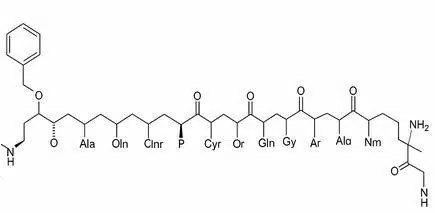
Type: GHRH (1–29) analog
Peptide Sequence: Tyr-D-Ala-Asp-Ala-Ile-Phe-Thr-Asn-Ser-Tyr-Arg-Lys-Val-Leu-Gly-Gln-Leu-Ser-Ala-Arg-Lys-Leu-Leu-Gln-Asp-Ile-Met-Ser-Arg-NH₂
Length: 29 amino acids
Molecular Formula: C₁₅₂H₂₅₂N₄₄O₄₂
Molecular Weight: ~3368.7 g/mol
Ipamorelin
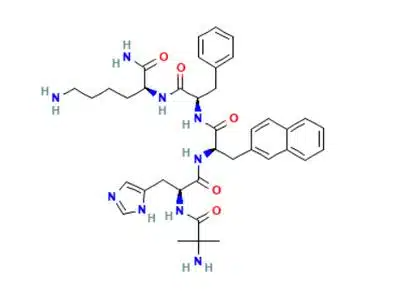
Type: Synthetic pentapeptide, selective GH secretagogue (GHSR agonist)
Amino Acid Sequence: Aib–His–D-2-Nal–D-Phe–Lys–NH₂
Length: 5 amino acids
Molecular Formula: C₃₈H₄₉N₉O₅
Molecular Weight: ~711.9 g/mol
Synergistic Research Interaction
When examined together, CJC-1295 (No DAC) and Ipamorelin exhibit a complementary interaction that enhances growth hormone signaling efficiency in laboratory models. CJC-1295 (No DAC) provides the upstream GHRH-mediated signal, while Ipamorelin serves as a potent downstream trigger through ghrelin receptor activation.
This dual-pathway stimulation has been shown in research observations to produce a more distinct and measurable GH signal than either peptide alone. The combination does not rely on prolonged exposure but instead focuses on creating transient spikes that align with natural endocrine rhythms observed in biological systems.
Researchers frequently describe this interaction as:
- Signal amplification without continuous stimulation
- Improved temporal alignment of GH release patterns
- Reduced downstream hormonal noise
- Enhanced reproducibility across pulse-based study designs
What Distinguishes the No-DAC Approach
A defining feature of this blend is the intentional omission of DAC (Drug Affinity Complex) modification. Many peptide formulations rely on longer-acting compounds that extend receptor activity, which can complicate timing-based studies.
CJC-1295 (No DAC) is examined precisely because it avoids these complications. Its rapid clearance allows researchers to:
- Study discrete GH pulses
- Explore multiple daily signaling intervals
- Minimize receptor desensitization effects
- Improve alignment with circadian rhythm models
When paired with Ipamorelin – a peptide also known for its rapid onset and short activity window, the result is a research toolset designed for accuracy and predictability rather than prolonged exposure.
Research Applications and Investigative Focus Areas
(For informational and laboratory research purposes only)
Within experimental frameworks, the CJC-1295 (No DAC) and Ipamorelin blend has been studied in relation to:
- Growth hormone signaling dynamics
- Recovery pathway modeling following mechanical or metabolic stress
- Tissue regeneration markers
- Metabolic balance and substrate utilization models
- Sleep-cycle–associated hormone release research
- Cellular repair signaling pathways
- Age-related endocrine signaling changes
These investigations are conducted in controlled environments using appropriate research methodologies. No conclusions regarding therapeutic or consumptive use are implied or supported.
Product Integrity and Research Standards
Licensed Peptides provides the CJC-1295 (No DAC) + Ipamorelin 10 mg blend exclusively for research and investigational use. All products are manufactured and handled to meet stringent quality and consistency expectations appropriate for laboratory analysis.
Key quality considerations include:
- Accurate peptide identification and composition
- Secure, professional-grade packaging
- Consistent batch handling practices
- Reliable sourcing and documentation
Licensed Peptides does not market or endorse this product for diagnostic, therapeutic, or consumptive purposes.
Frequently Asked Questions
1. What is the CJC-1295 (No DAC) + Ipamorelin blend?
This blend is a dual-peptide research formulation commonly examined for its ability to stimulate endogenous growth hormone signaling through two distinct receptor pathways, GHRH receptors and ghrelin receptors, within experimental models.
2. Why are these two peptides studied together?
CJC-1295 (No DAC) and Ipamorelin are frequently paired in studies because they complement each other’s mechanisms. One initiates the signaling cascade, while the other amplifies the release event, resulting in more defined GH pulses during observation.
3. What makes the No-DAC version significant in research settings?
The No-DAC variant is short-acting and does not remain bound to albumin. This allows researchers to observe discrete signaling events, maintain tighter timing control, and avoid prolonged receptor engagement.
4. How does Ipamorelin differ from older GH secretagogues?
Ipamorelin demonstrates a higher degree of selectivity in experimental studies. It primarily targets GH release pathways while showing minimal activation of cortisol or prolactin-associated signaling systems.
5. What research areas commonly involve this blend?
This combination is often explored in studies related to endocrine signaling rhythms, tissue regeneration pathways, metabolic modeling, recovery signaling, and sleep-associated hormone release dynamics.
6. Is this blend associated with appetite signaling in research models?
While Ipamorelin interacts with ghrelin receptors, experimental observations suggest it does not significantly activate appetite-related pathways compared to traditional ghrelin analogs, making it preferable for focused GH research.
7. How long are these peptides active in experimental contexts?
Both peptides are short-acting. Their effects are typically observed over minutes to hours depending on study design, allowing synchronized pulse modeling rather than continuous stimulation.
8. Why is this blend examined in sleep-cycle research?
Growth hormone release is closely tied to deep sleep phases. Researchers investigate this combination to better understand GH pulse timing in relation to circadian rhythm alignment and nocturnal endocrine activity.
9. Can this blend be studied alongside other peptides?
In laboratory settings, researchers sometimes examine this blend alongside peptides associated with tissue repair, inflammatory signaling, metabolic regulation, or structural integrity to observe potential pathway interactions.
10. How is this blend different from exogenous growth hormone in research?
Rather than introducing external GH, this combination stimulates endogenous release mechanisms. This allows researchers to study natural signaling feedback loops, pulse dynamics, and regulatory processes.
11. What role does Ipamorelin play specifically in the blend?
Ipamorelin functions as a ghrelin receptor agonist, enhancing the GH release signal initiated by CJC-1295 (No DAC). Its selectivity contributes to a cleaner and more targeted signaling profile in studies.
12. Is this product approved for human or animal use?
No. This product is intended solely for laboratory research and investigational purposes. It is not approved for human or animal administration, consumption, or therapeutic use.
13. Why is CJC-1295 (No DAC) supplied as an LPS-free peptide for research?
CJC-1295 (No DAC) is provided as an LPS-free peptide to minimize the risk of endotoxin-related interference in laboratory experiments. Lipopolysaccharides (LPS) can trigger unintended cellular responses, which may compromise data accuracy in sensitive research models.
14. What does endotoxin-free peptide designation mean in research applications?
An endotoxin-free peptide indicates that the product has been processed and tested to ensure endotoxin levels fall below established research thresholds. This is particularly important for in vitro and biochemical assays where contamination could alter signaling pathways or experimental readouts.
15. How does research peptide endotoxin testing support experimental reliability?
Research peptide endotoxin testing helps confirm batch consistency and purity prior to release. This testing supports reproducibility across studies by ensuring that observed outcomes are attributable to the peptide itself rather than external contaminants.
Research
Ipamorelin, the first selective growth hormone secretagogue
The discovery and pharmacological evaluation of ipamorelin, a novel and potent growth hormone (GH) secretagogue, are presented. Ipamorelin is a synthetic pentapeptide (Aib-His-D-2-Nal-D-Phe-Lys-NH₂) that demonstrates strong GH-releasing activity both in vitro and in vivo. Developed through an extensive medicinal chemistry program, it emerged from a series of analogs that lack the central Ala-Trp dipeptide found in earlier GHRP-1 derivatives.
In primary rat pituitary cells, ipamorelin stimulated GH release with potency and efficacy comparable to GHRP-6 (EC₅₀ ≈ 1.3 ± 0.4 nmol/L, Emax ≈ 85 ± 5% vs. 2.2 ± 0.3 nmol/L and 100% for GHRP-6). Receptor profiling using antagonists confirmed that ipamorelin acts via the GHRP receptor, similar to GHRP-6. In anesthetized rats, ipamorelin induced GH secretion with an ED₅₀ of ~80 ± 42 nmol/kg and Emax of ~1545 ± 250 ng/mL, values again in line with GHRP-6 (ED₅₀ ~115 ± 36 nmol/kg, Emax ~1167 ± 120 ng/mL). Studies in conscious swine also showed nearly identical GH release between ipamorelin and GHRP-6 (ED₅₀ ≈ 2.3 ± 0.03 nmol/kg; Emax ≈ 65 ± 0.2 ng/mL vs. ED₅₀ ≈ 3.9 ± 1.4 nmol/kg; Emax ≈ 74 ± 7 ng/mL). By contrast, GHRP-2 exhibited greater potency but lower maximal response (ED₅₀ ≈ 0.6 nmol/kg; Emax ≈ 56 ± 6 ng/mL).
Importantly, ipamorelin’s specificity for GH release was confirmed in swine, as it showed no significant effects on FSH, LH, PRL, or TSH. Furthermore, while GHRP-6 and GHRP-2 increased circulating ACTH and cortisol, ipamorelin did not elevate these hormones—even at doses exceeding 200-fold above its GH-releasing threshold.
In summary, ipamorelin represents the first GHRP-receptor agonist with a selectivity for GH release comparable to GHRH, making it a highly promising candidate for future clinical development.
Combined administration of ghrelin and GHRH synergistically stimulates GH release in Holstein preweaning calves
An online ethnographic study examined how women discuss and use CJC-1295, a synthetic growth hormone analogue, within bodybuilding forums. After screening nearly one hundred forum hits, 23 discussion threads from nine sites were analyzed. Female participants reported turning to CJC-1295 for goals such as fat reduction, muscle development, youthful skin, better sleep, and injury recovery. Users often combined it with other performance and image-enhancing substances, reflecting a high level of informal pharmacological knowledge. Concerns were also raised about gender-specific differences in growth hormone activity, particularly in relation to dosing, cycling, and long-term safety. The findings highlight the need for public health strategies that address women’s self-directed use of growth hormone analogues and potential risks tied to unsupervised supplementation.
Referenced Citations
Van Hout MC, Hearne E. Netnography of Female Use of the Synthetic Growth Hormone CJC-1295: Pulses and Potions. Subst Use Misuse. 2016 Jan 2;51(1):73-84. doi: 10.3109/10826084.2015.1082595. Epub 2016 Jan 15. PMID: 26771670.
Raun K, Hansen BS, Johansen NL, Thøgersen H, Madsen K, Ankersen M, Andersen PH. Ipamorelin, the first selective growth hormone secretagogue. Eur J Endocrinol. 1998 Nov;139(5):552-61. doi: 10.1530/eje.0.1390552. PMID: 9849822.


